Neuroscience the biological basis of reality
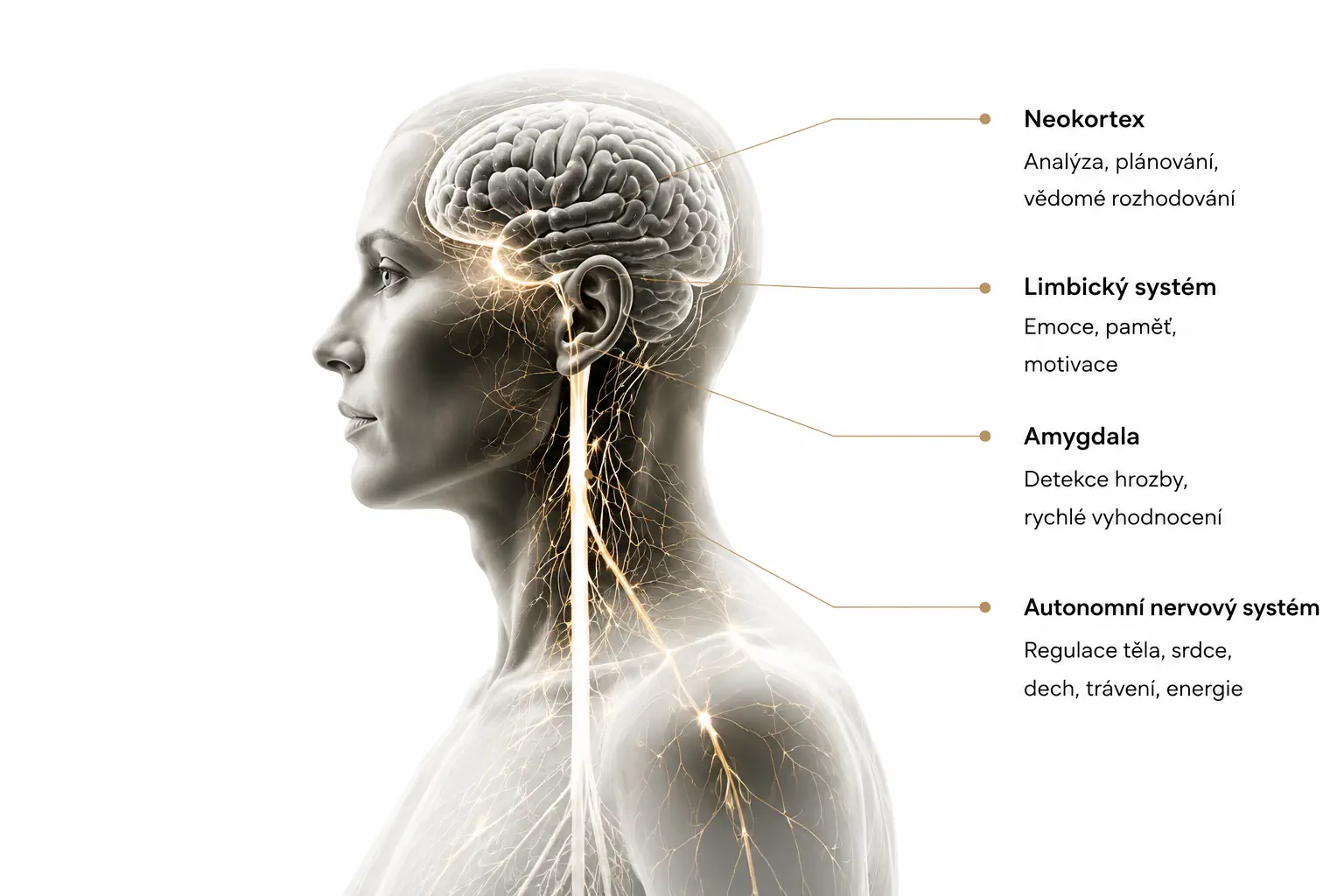
The body and nervous system constantly filter reality according to what they judge as safe, demanding or threatening. And it is through this inner state that you then perceive the world, people and your own possibilities.
A large part of your reactions arise automatically, before you have a chance to evaluate them consciously.
The body and nervous system constantly filter reality according to what they judge as:
This sets your inner state.
And it is through this inner state that you then perceive the world, people and your own possibilities.
Compensation is a state of the nervous system.
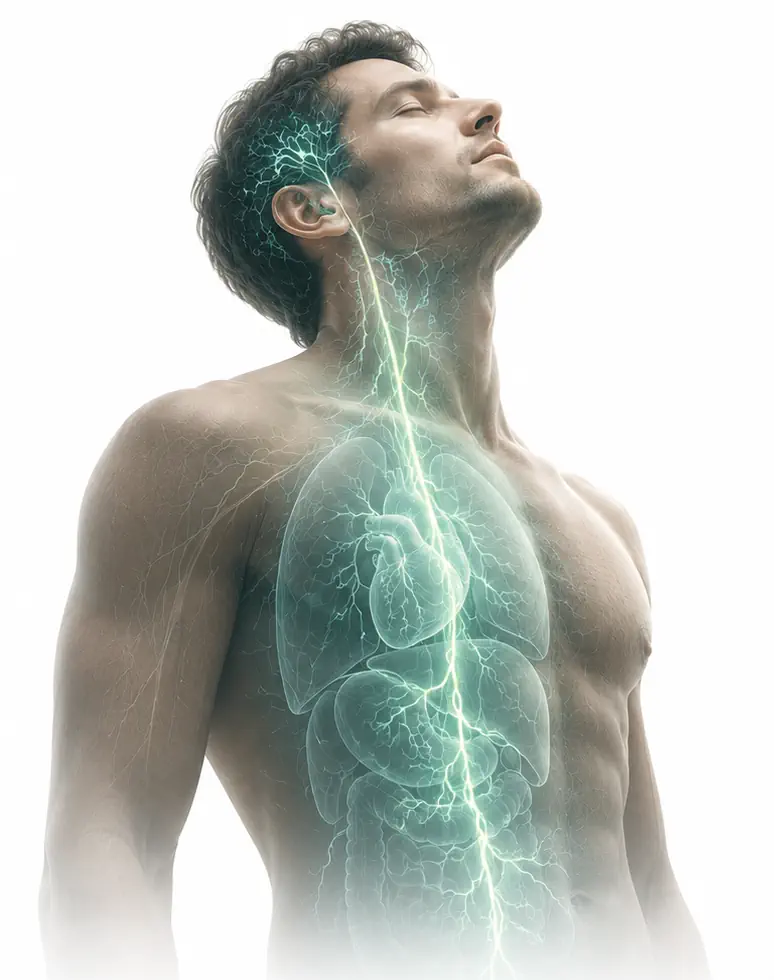
Throughout the day you keep moving between different levels of nervous system activation, depending on what is happening inside your body and around you.
Regulation and connection
A state in which the system perceives no immediate need for defence. Contact, flexibility, creativity, broader attention and the ability to regenerate are more available.
The pressure doesn't disappear, but the system has enough capacity to respond without automatically switching into defence mode.
Mobilisation
The system prepares the body for action. Alertness, pace, focus on performance and the ability to react quickly all rise.
Mobilisation in itself is not a problem. It is a natural and necessary part of functioning.
Shutdown and immobilisation
When the load is too high for too long, or the system lacks the resources for further mobilisation, shutdown can follow. You may feel:
On the outside you may still be functioning. That is exactly why this mode can be hard to recognise for a long time.
The problem arises when high activation becomes the long-term default mode and the system can't return flexibly enough. This is where compensation begins.
Reactions to pressure
Fight
- outbursts of anger
- controlling behaviour
- explosive behaviour
Flight
- workaholism
- anxiety, panic
- perfectionism
Freeze
- feeling stuck
- isolation
- dissociation
Fawn
- people-pleasing
- porous boundaries
- dependent patterns
Attach
- clinging
- fear of abandonment
- need to be accepted
Same world. Different system. Different reaction.
What one person experiences as calm and pleasant can be overwhelming and unpleasant for another nervous system. Likewise, the space, pace of work or amount of social contact that supports one person can significantly increase the energy another person needs to adapt.
For basic orientation I work with three distinct types of ANS functioning (autonomic nervous system).
High sensitivity to the amount of input
The system has finely tuned perception and often quickly picks up changes, details, the mood of the environment or a mismatch that others haven't noticed yet.
Stress response
Under pressure there may be rapid activation, a need to withdraw, a reduced ability to filter stimuli, or a sense of a foggy mind when there is too much input.
What the system needs
More predictability, the ability to influence the amount of stimuli, enough privacy and regular periods without outside noise and information.
High tolerance of load
This system can handle a large amount of work, responsibility and pressure for a long time. It is stable, resilient and can often keep going longer than most people around it.
Stress response
It tends to overlook subtle signals of overload. The fact that the system still functions can create the impression that everything is fine, even while the biological cost is gradually growing. So the stop sometimes comes much later than would be useful.
What the system needs
A firm structure, regular contact with its own capacity and conditions that support regeneration before the load becomes too high.
High adaptability and a need for movement
The system can respond very effectively to change, high dynamics and shifting conditions. It has a high capacity for mobilisation and rapid adaptation.
Stress response
Under long-term restriction, rigidity or lack of choice, restlessness, irritation and a need for change can grow. The system may start to activate just to regain a sense of movement and autonomy.
What the system needs
Choice, movement, variety, enough space and the ability to actively change the way it works and regenerates.
It's not about being or having the “BEST” ANS type
Every setting has its strengths and its weak spots.
can see connections others overlook.
can carry an exceptionally high load.
can excel in a rapidly changing environment.
The problem arises when we try to tune all systems the same way.
Your nervous system doesn't end at your skin.
Your system reacts all day long — to the rhythm of work, the number of interruptions, light, noise, space, people, the availability of privacy, the way you rest and how many times a day it has to switch context.
The same space can help one person focus and overwhelm another.

Lifestyle architecture is part of neuro mentoring, and it is about something much bigger than aesthetics. It means designing a space that works as an external regulator of your nervous system.
We look not only at what you do, but also at the environment in which your system has to function all day — at the sources of load. And we create conditions in which your system has a better chance to focus and regenerate.
Lifestyle architecture is not about moving your desk, buying a different lamp and the problem disappearing.
The environment is one layer. Equally important are:
That is why in individual work we don't look at one isolated variable. We look at the whole system in which your nervous system functions every day.
In detail and individually, through Neuroarchetypes, which can name the individual differences between archetypes within the three ANS types even more deeply.
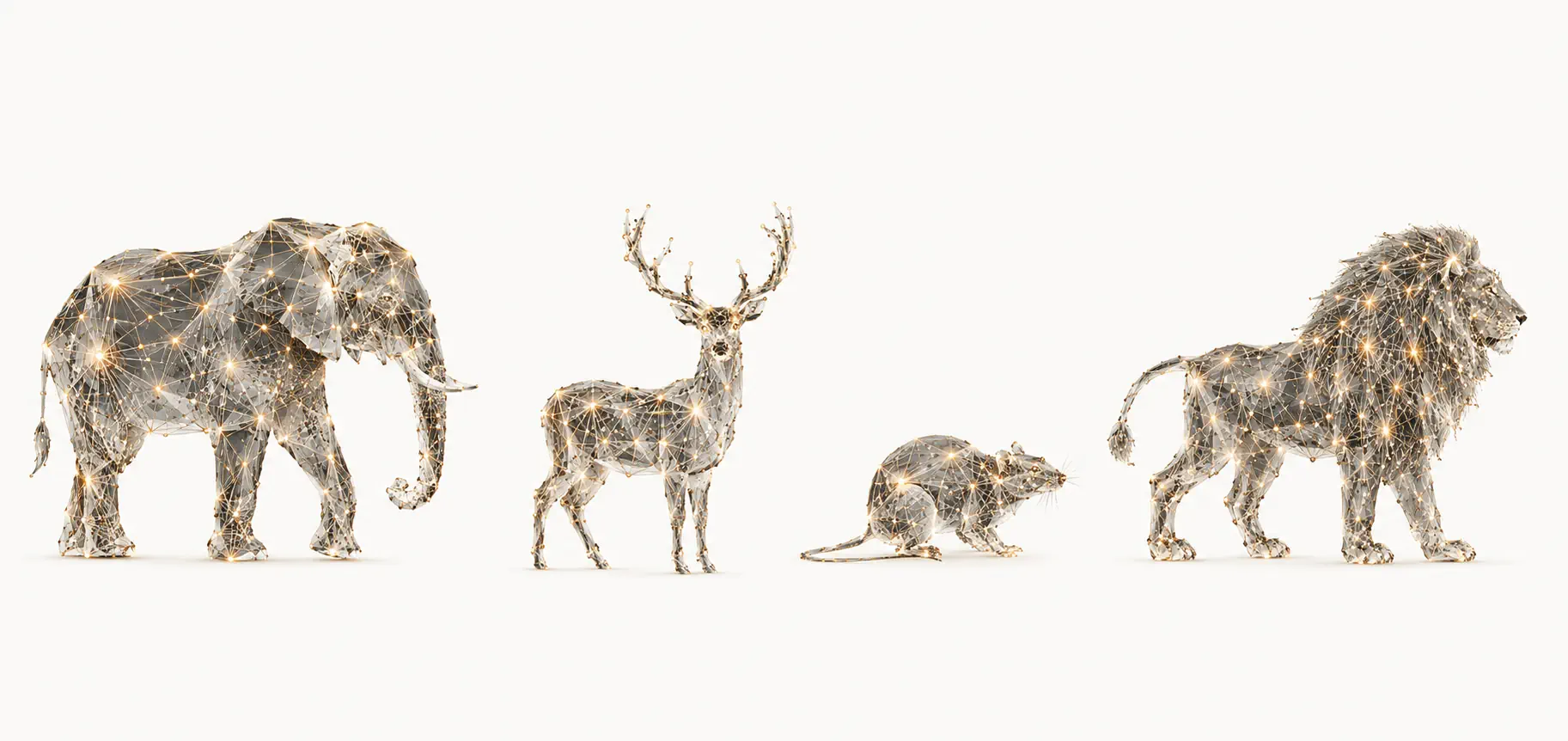
Your body as an animal archetype
Neuroarchetype is a system of default ANS patterns that I have rediscovered, named through animal archetypes.
The brain loves shortcuts and visual metaphors. An animal archetype shows instantly, without complicated theory, how your body behaves under threat.
For detailed orientation I work with almost thirty ANS Neuroarchetypes (autonomic nervous system).
Most leaders operate in an environment designed for “average” standards, while their specific biology needs a completely different calibration for peak performance.
Stop
- wasting energy fighting the wrong settings
- interpreting your stress or burnout as a personality flaw
Start
- designing your world for real results and neurological calm
- treating stress and burnout as a purely physiological state
Be the king of your kingdom. But remember: your kingdom begins inside your nervous system.
Knowing your biological type is a map to claiming your true sovereignty, and it requires an individual biological plan.
We don't create a universally right life.
We design conditions that make sense for your specific system.