I work with people who can carry a great deal on the outside, but inside no longer want to live solely through strength, control, and holding everything together.
I know the world where, on the outside, you appear strong and capable, while you may be slowly drifting away from yourself. From your body. From joy. From vitality. From what is real.
It is not about creating a perfectly optimized version of yourself.
I am interested in how you can sustain performance, responsibility, and leadership over the long term without constantly relying on pressure and overload.
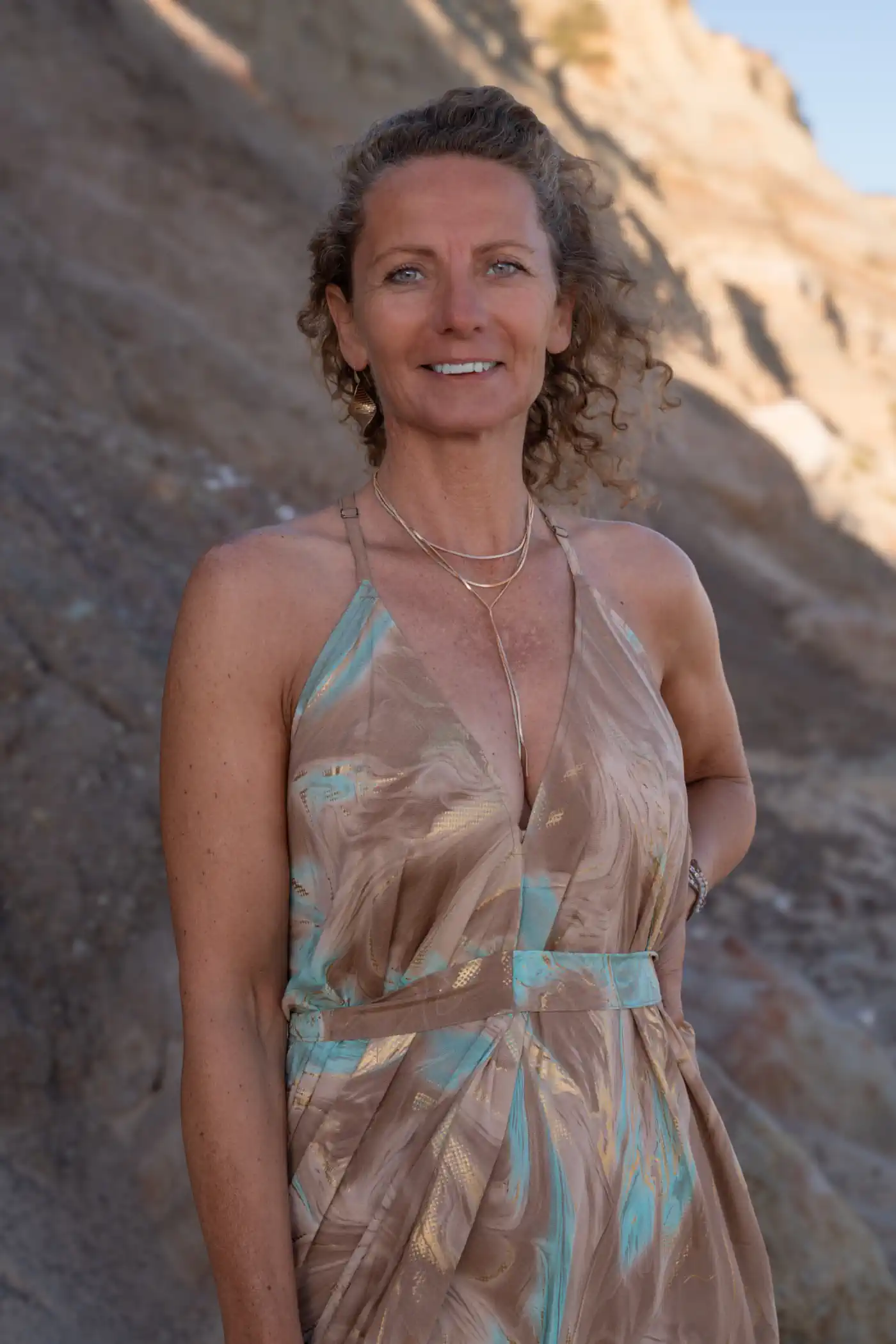
I came to what I do today through my own “ups” and especially my “downs”
My own periods of overload and years of searching led me to the question of why general advice works for some people — and not for others.
For my own sensitive nervous system, many conventional recommendations did not feel like support. Sometimes they led to even greater overload.
So I began looking at what happens beneath the surface: why each person responds differently to the same pressure, why they have different triggers, different protective responses, and a different path back to capacity.
Gradually, a different perspective began to emerge.
It is not enough to understand what a person experiences or how they behave. We also need to understand how their particular system responds to pressure, environment, responsibility, and uncertainty.
This long-term search gave rise to Neuroarchetypes — my own working model of individual nervous system patterns.
Two experiences that shape my work today
Master’s Degree from Charles University
Faculty of Physical Education and Sport + 12 years of elite-level sport
My journey began with the body.
My studies at the Faculty of Physical Education and Sport and years of elite-level sport taught me to perceive how the organism responds to load, when it begins to compensate, and what it needs to return to functional performance.
Later, I began to see the same question in business.
What happens to a person who, over the long term, makes decisions, carries responsibility, holds the direction, and at the same time has to look as if they are handling everything?
15 years leading two companies
I understand the demands of real business
I know first-hand the reality that plays out behind presentations, meetings, and results.
I know the pressure of constant availability. Decision-making under uncertainty. Responsibility for people, cash flow, and the direction of the company.
I also know the isolation at the top — being a source of support for others while having few places where you can put down the role of the one who holds everything together.
That is exactly why I do not see performance only as a matter of discipline or time management.
I am interested in the biological price your system pays for it over the long term.
Three levels in one practice
I bring a feel for the body under load.
experience with pressure, responsibility, and decision-making that is not always visible from the outside.
the ability to follow what is really happening inside a person before their state shows up in a decision, a relationship, or in leadership.
Today, I bring these levels together in individual Neuro Leadership Mentoring.
Not to turn you into a more high-performing version of a person.
But so that you can lead, decide, and live in a way your system can sustain over the long term.
I do not work by a single method or a universal template
First, I observe what your system actually does. How it responds to pressure, responsibility, uncertainty, change, relationships, and the environment you function in every day. Only then do I choose the way of working that is useful for you at that moment and that matches how much real capacity you have.
The autonomic nervous system
It helps us understand how the body responds to pressure, when it shifts into mobilization or withdrawal, and how these states show up in decision-making, leadership, relationships, and recovery.
Neuroarchetypes
They help name how your particular system handles capacity, what overwhelms it, what strategies it uses under pressure, and what helps it return to greater flexibility.
Somatic work
We do not stay only with what you understand in your head. You learn to perceive how your reactions show up in the body, which signals come first, and how to create more space between a stimulus and an automatic reaction.
Somatic Experiencing® (Dr. Peter Levine) — a globally recognized neurobiological approach for working with stress, trauma, and nervous system overload.
Your real life
The work does not happen separately from your life. Specific decisions, conflicts, delegation, relationships, changes, periods of high pressure, and the way you rest are all part of our work.
We do not work with an abstract type of person. We work with you, in the reality where you actually live and lead.
Systemic constellations
Depending on the situation, I can also work with the systemic context — with how an individual’s patterns connect to their relationships, role, and environment.
Human Design as part of my journey
My long-term studies also included systems that work with individual differences and birth data, including Human Design.
I do not use all the tools at once.I choose from them based on what is truly useful for you right now.
My original working model of individual nervous system patterns
Neuroarchetypes help me name more precisely how a particular person handles their capacity and how their system responds to pressure, environment, and uncertainty.
A Neuroarchetype is not a personality type, a diagnosis, or a label. It is an individual map that helps you better understand your own system and find your way in what is happening to you.
They help show:
- what typically activates your system
- what it perceives as safety and what as threat
- how it responds under pressure
- where it begins to lose capacity
- what compensatory strategies it uses
- what helps it return to greater flexibility, stability, and recovery
How did Neuroarchetypes come about?
I arrived at Neuroarchetypes through long-term study of systems that use date, time, and place of birth as a starting point for describing individual differences. Human Design was one of them.
Gradually, a different question began to interest me:
Not what a person is like, but why different people respond so differently to the same pressure.
I began connecting this way of thinking with my work with the autonomic nervous system, somatic awareness, and individual capacity. This long-term search gave rise to my own model of Neuroarchetypes.
Date, time, and place of birth are input data within the model. The way they are interpreted, the individual archetypes, and the resulting map are part of my original working model.
That is why I do not present Neuroarchetypes as a scientific diagnostic or as a universally valid system. They are my own way of helping a person better recognize their natural tendencies, their reactions under pressure, and the conditions in which they can return to their capacity.
I work exclusively on an individual basis and go deep
We do not start with a universal plan or a pre-prepared procedure. First, we look at what your particular system actually does — how it responds to pressure, responsibility, change, relationships, decision-making, and rest.
I adapt the pace and format of our work to your current capacity. The goal is not to add more pressure to perform, but to create conditions in which real change can happen.
I work with a limited number of clients at a time, so that there is room between us for precision, attention, and trust.
Longer-term work also includes ongoing support between sessions — for example, through a voice message or consultation when a major decision, a challenging situation, or the return of a familiar pattern arises.
It is for you if you no longer want — or are no longer able — to pay such a high internal price for your life and your ability to function
It is for you
You may keep finding yourself in similar patterns:
- in relationships, professional and personal;
- in the way you lead people;
- in decision-making under pressure;
- in how much responsibility you automatically take on;
- in your ability to rest and truly recover.
You no longer want another generic guide on how to “function correctly.” You want to better understand yourself, your body, and what is happening inside you before you react in a way you already know.
You may be going through a major transition. Your existing way of living or leading may be starting to change, and you do not want to go through it alone. You need space to make decisions, support throughout the process, and the ability to stay connected to yourself even when there is a lot of pressure around you.
You genuinely want to change something — not simply endure, cope, and keep moving forward once again.
It is not for you if
- you are looking for a quick guide, an instant fix, or a guaranteed result;
- you want someone else to make the change for you;
- you are looking for business consulting, a company management strategy, or help with an acute mental or medical health crisis.
You can still sustain your performance, but is the cost rising dramatically? Is your body starting to say no?
The problem may not be a lack of discipline or ability. Your existing way of functioning may have simply reached the limits of its biological lifespan.
What kept you performing for a long time may no longer be the way that can carry you over the long term.
I guide you in changing the way your nervous system carries the load.
Not so that you stop leading, creating, or making decisions. But so that you no longer have to do it only through pressure, control, and your own exhaustion.